don't forget:
you can buy records direct from me...just use the contact form.
maybe I can help you as well with sold out record items.
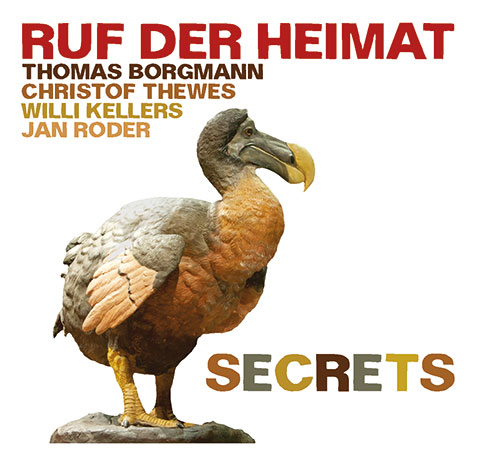
ruf der heimat
► new CD "Secrets", recorded live October 2019, with the great Christof Thewes on trombone, and Jan Roder on bass, taking the right turn.
keys & screws with Jan Roder & Willi Kellers
~ some more jazz ~
John Sharpe @ Point of Departure:...it's an outstanding release.
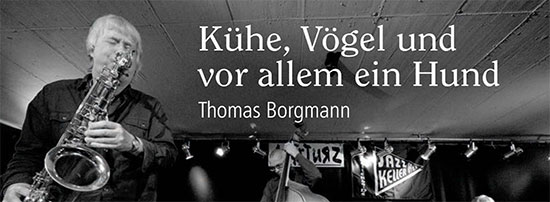
Ulrich Steinmetzger, 5-seitiges Portrait: Sonic-Magazin, März 2021
new release: NoBusiness-Records
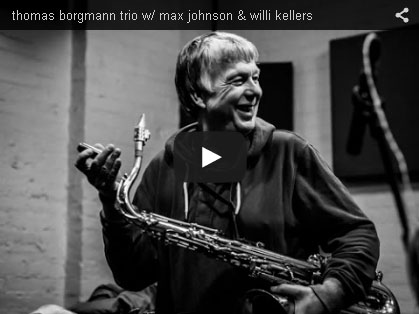
Thomas Borgmann Trio with Max Johnson, Willi Kellers
New York Tenor Saxophone Festival, Jan 31, 2015
"...Borgmann inhabits the wonderland of his saxophones...
His voice is lithe and his fingering on the buttons so nimble that the notes he plays seem like pixies, alive and dancing on the very notes of each melody.
Borgmann, of course sees a bird doing all of these wonderful things with the melodies, while he skips and floats on soprano and sopranino saxophones, effortlessly skittering up impossible high and equally unimaginable low tones on each of the high horns.
Even on tenor, Borgmann's touch is deft, almost glancing, as he crafts the narrative that follows his imaginary bird, the very personification of Dolphy—and anyone who graced the visions of the avant-garde playing a straight or curved horn, from sopranino to tenor.
The bird image, and the fluttering, soaring of the idiom of jazz itself, meet here, on the shimmering glacier of Borgmann's music." ✸hey little bird
Friday January 9th 2015 - 21:00 at AUFSTURZ, Berlin [Oranienburgerstr. 67]
just 60: Thomas Borgmann
stay tuned for the rest of the story…
Thomas Borgmann – reeds
Luten Petrowsky – reeds
Adam Pultz Melbye- bass
Christoph Winckel – bass
Jan Roder – bass
Tony Buck – drums
Willi Kellers – drums
organic the first set: a trio & a drum duo & another trio
free the second set: a quartet & a bass trio & the end
It is the voice inside the voice encountering the ear inside the ear, as reminisced by Khalil Gibran, the prophet, in Jackie McLean’s song.
There was a moment in Denis Charles last concert in Weiden, in 1998, when everybody could hear how he puts his drumsticks down, takes his mallets, hits the cymbal with one single beat, when bassist Wilber Morris suggests a subtle downward line, still undecided where to go, as such a voice rises.
Soprano saxophone, air, moist reeds. One sound. Three tones, reiterating the bass motif.
All of a sudden, a sound fills the room – echoing something but still determined to stand alone. Whoever doesn’t have at least one hair stand on end doesn’t have a single one left.
And no ear inside the ear. A short motif only, found and agreed, a couple of last beats on the cymbals. This moment – played by BMC Trio, live – embodies all of Thomas Borgmann.
The way he fits in, the way he sticks out. His tone, elaborate magic, developed over many years, fills the room.
His themes, motifs, lines and stories are solid enough to stand alone and yet arise from inventions and constructions of others.
A voice, still eager to sing, in and above the laissez-faire (Charles & Morris), the impulsive (Reggie Nicholson & Wilber Morris), the crazy (Tony Buck & Joe Williamson) and the elegant (Willi Kellers & Akira Ando) nexus of the others; a voice responding to Petrowsky’s weird interludes and striking a different, gentler song; a voice countering Brötzmann’s existential shrieking.
Sing your song, black bird.
Some of the many outstanding musicians performing this evening have been a part of the instrumental choir before.
Others, like Danish bassist Adam Pultz Melibye, will discover their ear inside the ear.
When this voice turns 60. Dankeschön.
~ Jan Künemund (translation by Ingrid Müller)
✸ text in deutsch +/-
Von der Stimme in der Stimme, die das Ohr im Ohr trifft, sprach der von Jackie McLean besungene Prophet Khalil Gibran.
Es gibt einen Moment im letzten Konzert von Denis Charles, 1998 in Weiden, als dieser hörbar seine Sticks weglegt, seine Mallets nimmt, einen einzigen Schlag auf das Becken setzt, der Bassist Wilber Morris eine kleine Abwärtslinie andeutet, die noch nicht so richtig weiß, wo sie hin will, als so eine Stimme ertönt.
Sopransaxofon, Luft, feuchtes Rohrblatt. Ein Ton. Drei Töne, die das Bassmotiv aufgreifen.
Da steht plötzlich ein Sound im Raum, der etwas anderes weiterschwingen lässt und gleichzeitig entschieden alleine da ist.
Wem sich da nichts aufrichtet, hat kein Haar mehr auf der Haut.
Und kein Ohr im Ohr. Ein kurzes Thema nur, gefunden oder verabredet, ein paar letzte Schläge aufs Becken.
Dieser Moment, vom BMC Trio, live, enthält den ganzen Thomas Borgmann.
Wie er sich einfügt, und wie er einfach da ist. Sein Ton, sein in vielen Jahren erarbeiteter Zauber, steht im Raum.
Seine Themen, Motive, Linien, Geschichten sind sich immer ein bisschen selbst genug und entstehen doch gleichzeitig aus den Erfindungen und Bauten der anderen.
Eine Stimme, die noch singen mag, in und über dem lässigen (Charles & Morris), dem treibenden (Reggie Nicholson & Wilber Morris), dem irren (Tony Buck & Joe Williamson) und dem eleganten (Willi Kellers & Akira Ando) Geflecht der anderen, die den kauzigen Einlagen von Petrowksy geantwortet hat und dem existentiellen Geschrei Brötzmanns gegenüber ein anderes, sanfteres Lied anstimmte.
Sing your song, black bird.
Einige der vielen tollen Musiker an diesem Abend haben schon mal mitgesungen.
Andere, wie der dänische Bassist Adam Pultz Melbye, werden ihr Ohr im Ohr entdecken.
Diese Stimme wird 60. Dankeschön.
~ Jan Künemund
✸ ...read less +/-
oneblockwest
thomas borgmann / reggie nicholson - drums / bernard santacruz- bass

regarding the release of nasty & sweet (bmn-trio, nobusiness-records),
we set up this new trio; available for concerts in July, August, November, December 2013
Bernard Santacruz is the new bass in this trio. There is a long ongoing connection to him, not at least 'cause his intensive work & productions with Denis Charles, Frank Lowe, Charles Tyler ...
✸...read more
recently in concert: boom box
"... ich war gespannt, ob die band live auch so leicht spielt. dass es jetzt endlich mal wieder eine sorgfältig aufgenommene, schön gestaltete cd dieser band gibt, bei einem guten label, ist ja die eine sache.
dass man ab und zu die musiker in berlin (viel zu selten) in einem kleinen club hören kann (obwohl sie alle in berlin leben) die andere: schön, aber durchaus nicht selbstverständlich. aber was heißt das konkret, wenn man nach einer anstrengenden woche und einem langen bürotag in diesen merkwürdigen keller geht, draußen hat der berliner winter nochmal zugeschlagen, der rotwein ist nicht gut und die anmoderation nicht gerade enthusiastisch? "jetzt gibt's jazz."
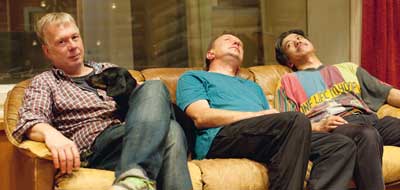
konkret heißt das: vom ersten ton an gefangen zu sein, mitzugehen mit dem, was die drei da machen. hat mit den kompositionen der cd erst mal nichts zu tun, "kompositionen" ist ja sowieso hier ein falsches wort.
ein langer, zurückhaltender bogen zunächst, gefühlvolle melodieverschiebungen des tenorsaxophons, traumhafte harmonische einbettung durch andos bass, atmosphärische perkussion von kellers. ganz zurückhaltend, suchend, ganz eindeutig in einer afroamerikanischen tradition, mit der alle drei sich sehr gut auskennen (borgmann hatte mit denis charles und wilber morris ein trio, hat in den usa mit william parker gespielt, charles gayle und vielen anderen; ando war lange bassist von cecil taylor; kellers hat mit gayle und frank wright gespielt).
hier geht es nicht um jazz als (erlernbare) sprache, sondern um eine suche, eine erweiterung, eine überwindung von formeln und methoden. so dass man beim gefühl anlangt, bei impulsen und energien.
das zweite stück ist dann von der cd und jetzt fliegt es auch wie dort, mit borgmann im fliegenden wechsel seiner saxophone, mit dem verschroben originellen swing, den kellers drauf hat, den man nicht lernen kann. grandioses bass-solo, grandioses drumsolo (mit gong, daumenklavier und 30 jahre spielpraxis).
nach der pause vertraut die band dann der so aus den handgelenken fließenden leichtigkeit nicht mehr und geht auf risiko. ein gefühlt 30minütiges solo von borgmann auf vier verschiedenen instrumenten (vielleicht habe ich da gerade die kirk-brille auf?), dann, am ende noch ein ganz leichter shuffle zu zwei akkorden auf der mundharmonika. zuletzt landet man beim einfachsten.
schade, dass boom box so eine ausnahmemusik machen und damit recht alleine dastehen. ohne es zu wollen, vermutlich. ist schönheit in der musik ein spezialistenthema? oder bringe ich das zu einfach zusammen - schönheit und diese musik? für mich ist das, was die drei da gestern abend gespielt haben, ziemlich genau das, weshalb ich "jazz" höre..."
~ found comment on www.jazzpages.com
✸ not quite new...but nice...reviews found +/-
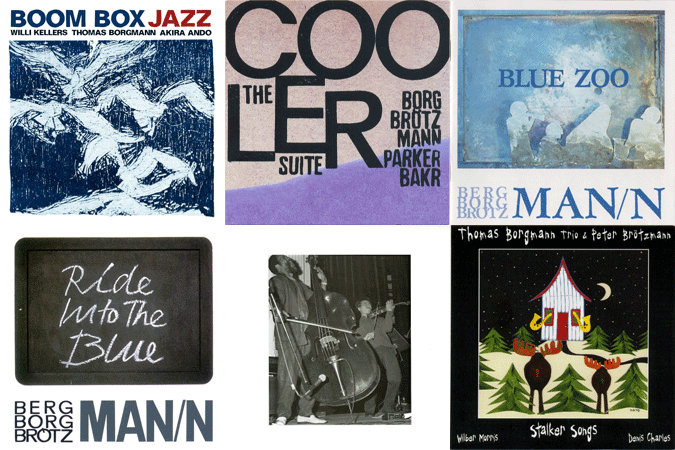
CD Ride into the Blue 
You already know by who is involved here that this plate is gonna be gone, don't ya? And you're right, but misjudging the proverbial blowhard free jazz mantra just a bit. There are six tunes here, supposedly four of them created on the spot, with one each by Borah Bergman and Thomas Borgmann.
But it feels as if everything here was rehearsed and piloted into the stratosphere -- and yes, that is a good thing. Hearing the titanium lungs of Peter Brötzmann playing a restrained and loping alto saxophone to Borgmann's shredding tenor and lilting sopranino is something akin to pure atonal joy.
When driven and underscored by the elliptical harmonic languages of pianist Bergman, the noise this trio makes becomes full of spaces and lush dynamics that make you rub your eyes and look at the record sleeve again.
One good listen to "Tomorrow Is No Question" should be enough to convince anybody that free jazz is more that gutting the horns and slashing the strings.
These spaces are majestic and haunting at once; they whisper in minor and diminished sixths and drop the entire family of demons down with shrill legato squawks and shrieks in the very next moment but, like a Hitchcock film, you know it's coming.
There are also moments of true exploration here, such as on "Surfing the Blues," when Bergman ushers an invitation for both horn players to engage in a lively session of overtonal interplay with his piano and with each other.
The tempos change and the dynamics shift more subtly because of the intensity of the piece. But the grandest thing here, and by far the most creative collectively, is the improvisation "Stranger in the City," which lasts for nearly half an hour.
No one has ever heard Brötzmann play with such alchemical liquidity and economy of lyrical language, no matter how frayed the piece gets in sections.
The tinge of silence is always present in Bergman's right hand, playing ghostly in the middle registers with elegance and restraint as Borgmann intones chromatically on the sopranino and then plays with it in the context of the feeling of strangeness and alienation.
It's breathtaking. What an album!
~ All Music Guide
CD BLUE ZOO 
Oh yeah, here we go. Three of free improv's wildest wonders in a set of spontaneous compositions set to curl the hair on the back of your neck and send you screaming into the night. Nah, it's not all that bad -- or good, depending on your point of view -- but this is a fine example of how the spontaneous composition principle works when it's displayed by three monster musicians such as these.
With two sax players (and Brötzmann also plays bass clarinet) and a pianist all waiting for the moment to cut loose -- and wait, and wait, and wait -- the results are bound to be a bit daunting.
And while it's true they are, they're also a hell of a lot of fun. Here tensions are created endlessly, it seems, just to see who is going to break and tear into the open field of improvisation first. Certainly "Clear Visions" is like this, as are the title track and "Stride Ahead."
Elsewhere the trio seems to engage one another in creating loose intervals of improvisation, evoking senses of time and even rhythm in places, which is an illusion.
The intervals created are for polytonal engagement, especially between the two saxophonists. As these duels ensue as they do on "Right Now" and "One Block West," Borah Bergman tears into the high register and establishes a percussive ostinato that falters in between intervals and moves off to create another it cannot sustain; there's too much going on tonally to stay put for very long at all.
Hence this is a rabid-dog dialogue that is more restrained than it would at first appear, but is nonetheless wilder than 99 percent of the free improv work out there.
It may not be for the faint-hearted, but it is truly rewarding music.
~ All Music Guide
CD STALKER SONGS
Thomas Borgmann's trio, with the late Denis Charles on drums and Wilbur Morris on bass, was a formidable unit. They were capable of bringing together both side of the jazz avant-garde (the fiery, wildly dissonant, and intense side with the space exploring, multi-textured, microtonally conscious side) effortlessly, and often within the same composition. This is no mean feat for a trio.
When saxophone wailing Wotan Peter Brötzmann was added to the equation for this impromptu date, it would seem that the scales tip decidedly in favor of one side. Not so.
The two tracks here and both spontaneous improvisations recorded in one day (the band played two half hour sets, had a two hour rest, and played two more). The tracks included are the first half-hour from each set. Here both saxophonists placed themselves solidly in front of one another and instinctually ask to be led by the rhythm section.
Anyone who is familiar with Charles and Morris knows the power they are capable of summoning on a moments notice.
Given how much younger Borgmann is than the rest of this group, it is stunning to hear how well he holds his own and even thrives in this setting.
There is no intimidation factor; he and Brötzmann move through each other like big immutable spirits, coloring the air with scalar inventions, tonal scrambles, and honking and squealing in rhythm.
The rhythm section has no trouble with cracking the whip on both men. Charles and Morris make an offering to the realms of texture, consistency, and spatial exploration all around the pair.
When it's all over, the listener is exhausted, having been taken to many places and through many changes in harmonic dimension and a palette of colors so rich and deep, it's a wonder they don't all run together.
And since this is the last session that Denis Charles played on -- he died at age 64 after touring with this band for a month -- it is a fitting send off for an artist of his stature.
~ All Music Guide
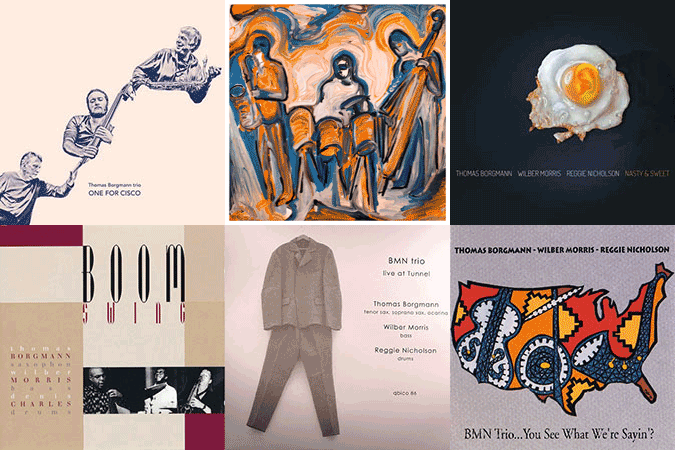
CD ORGANIC
This live date from 1997 features reedman Thomas Borgmann with bassist Wilber Morris and the late Denis Charles on drums performing in Germany. Though it was the first show of a tour, there is no hesitation on the part of the trio.
Sound begins to come from Charles, who ushers in a rubbing of his kit, a few taps to the wood, and then Borgmann enters with one short line, then a long line, then an invitation to Morris.
When the pizzicato begins, slowly at first, in tandem with Charles motioning around the kit with a loose orderly direction, it becomes Borgmann's cue to move into the space and begin to speak in those gorgeous elongated legato phrases of his, edges off the tone, but biting nonetheless.
Charles is his fixture, compelling him, edging him toward the ledge that Morris finally urges him to leap over in "Down Under." Almost 19 minutes long, this opening track better sums up the language of articulation used by this trio than anything else on the set, though all of its is worthwhile.
Other moments in the shop that offer flashes of lightning the darkness include the stunning multiphonics Borgmann employs in "Organic Sweet," and his below-the-belt Sonny Rollins low notes in "Ode to Sonny." Morris and Charles don't have to worry about containing or keeping up with Borgmann; they are deeply connected to his sound world, crisscrossing tonalities and sonorous problems with the ease of a child.
There are moments of thunder and moments of pastoral richness and pure emotion as these three take on the cosmic muse and create a series of microtonal improvisations that leave the listener stunned.
~ Thom Jurek, All Music Guide
CD BOOM SWING
While everything on this disc is worth discussing, its large suite, "Nastysweet Parts I & II," which covers over half the CD, is the place to fix your focus on. "Nastysweeet" is a gargantuan piece of group improvisation in which the entirety of Western music is called into question and found wanting.
The stalwart, visionary rhythm section of the late Denis Charles and bassist Wilber Morris accompanies saxophonist Thomas Borgmann, who uses tenor, soprano, and sopranino horns here.
Morris, who leads in ominously, plays single-note octaves and whole tones, re-tuning as he plays. Borgmann joins him sparingly, drifting in cautiously, playing in between those notes and around them with the bass at the center.
Charles is heard from in a sudden crash of cymbals and bass drum before easing his way in with fragments centered around Morris.
It is at this moment that Borgmann chooses to introduce the melody, steeped in blues and modalism and something else, a certain tonal inquiry that asks deep questions of both of them and never attempts to answer them -- at least to any kind of satisfaction.
As the piece takes off it becomes a no-holds-barred, three-sided argument for freedom and from consonance, an assent to dissonance -- not for its own sake, but for stripping away the historical layers that made it dissonant in the first place.
This is language music: it tells stories, it erects enormous harmonic temples that crash without a moment's notice, it breaks intervals in its teeth and boils them down into a squawking soup that pours forth in ribbons of pure sound.
It's almost impossible to listen to the other two cuts here because these are so dramatic and full of emotion they leave the listener exhausted. But that's a small complaint.
~ All Music Guide
CD You See What We're saying'?
The BMN Trio is Thomas Borgmann on saxophones, Wilber Morris on bass, and Reggie Nicholson on drums. The Trio is the successor to an earlier group with Denis Charles, whose death led to the substitution of Nicholson.
Evidently, the trio made this recording in conjunction with a national tour, and the session has the feel of a concert performance, with the four tunes averaging more than fifteen minutes apiece.
The "you were there" production technique (a characteristic of all CIMP releases) of engineer Marc Rusch adds to that feeling, as the dynamics and sound vary dramatically without any artificial recording cushion.
Borgmann is a powerful performer, who when given time to stretch, displays a remarkable diversity of style; and Morris and Nicholson provide strong support.
More than many CDs, this one requires close listening due to the sometimes-slow buildup (particularly on the lengthy "Goodbye Mr. Charles) and organic development.
~ Steve Loewy, All Music Guide
✸ ...read less +/-